
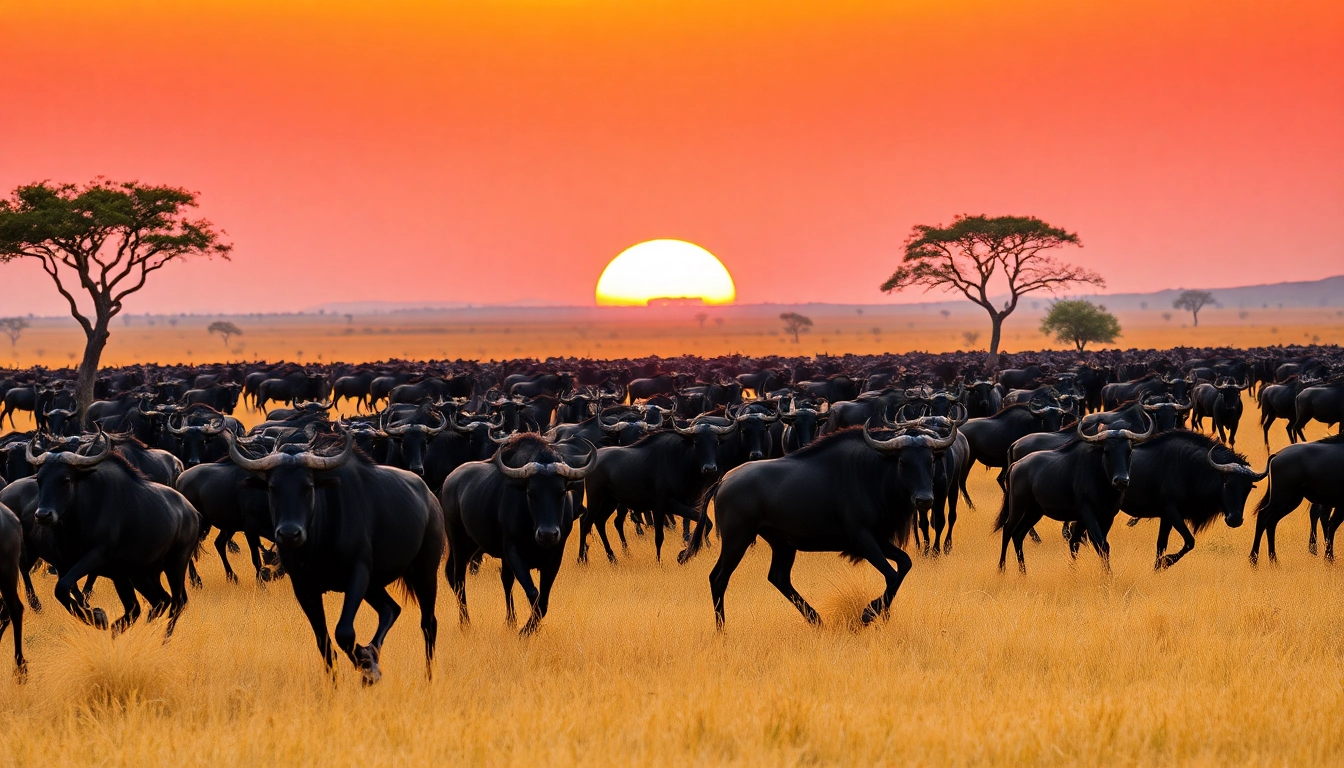
Understanding the Wildebeest Migration Safari
What is the Wildebeest Migration?
The Wildebeest migration safari is one of the most remarkable wildlife spectacles on Earth, where over a million wildebeest, along with thousands of zebras and other antelopes, embark on a perilous journey across the plains of East Africa. This migration is driven by the search for fresh pasture and water, making it a natural event governed by the climatic cycles of the region. The migration is not merely a phenomenon of animal movement; it plays a crucial role in the ecosystem of the Serengeti and Ngorongoro ecosystem, affecting not just the wildebeest but countless other species that depend on the same habitats.
Key Locations for Witnessing the Migration
The best places to observe the wildebeest migration are the Serengeti National Park in Tanzania and the Maasai Mara National Reserve in Kenya. These regions offer vast savannahs and grasslands that are essential for grazing. The Grumeti River and Mara River crossings are particularly famous, as they provide thrilling moments when wildebeest attempt to brave the waters while evading predators like crocodiles and lions. Other notable locations include the Ndutu region during calving season when thousands are born, contributing to the awe-inspiring spectacle of life in the wild.
Annual Cycle of the Migration
The wildebeest migration follows a cyclic pattern that can be divided into four main phases: the calving season from January to March, the grazing period from April to June, the river crossing phase from June to July, and finally, the return to the southern plains from August to December. In January, females give birth to their calves, peaking in February, and by March, the herds begin their journey southward as the grass begins to dwindle. The cycle is dictated by the rainy seasons; thus, understanding this cycle is key to maximizing your safari experience.
Planning Your Wildebeest Migration Safari
Best Time to Visit
The timing of your visit is crucial to experiencing the wildebeest migration at its finest. The best months are generally considered to be June to September when the herds are typically in the Maasai Mara and the iconic river crossings are occurring. However, the time from January to March is excellent for calving, offering a different yet equally spectacular view of the migration. Depending on what aspect of the migration you wish to witness, each month offers unique opportunities and experiences.
Choosing the Right Safari Tour
When selecting a safari tour, consider factors such as group size, type of vehicle, accommodations, and guides’ expertise. Private tours offer a more personalized experience, while group tours can be more cost-effective. Make sure that your chosen tour includes experienced guides knowledgeable about the migration and the surrounding ecosystems. Researching and reading reviews can provide insights into the best options available tailored to your preferences and needs.
Packing Essentials for Safari
Proper preparation can significantly enhance your safari experience. Essential items include binoculars for spotting wildlife, a good camera with zoom lenses for capturing incredible moments, and clothing that adapts to the warm days and cooler nights. Neutral-colored clothing that blends into the environment is recommended to avoid startling wildlife. Additionally, sunscreen, insect repellent, and personal safety items like a first-aid kit should not be overlooked. Lastly, ensure you have an adequate power bank to keep your devices charged throughout your safari.
What to Expect on Your Wildebeest Migration Safari
Wildlife Sightings and Interactions
The wildebeest migration safari promises a plethora of wildlife sightings beyond just the wildebeest. Visitors often encounter lions, elephants, cheetahs, and a variety of birds during their adventures. Guided tours offer an opportunity to learn about animal behaviors and the interconnectedness of species within their habitats. Expect thrilling encounters but remember to maintain a respectful distance to ensure both your safety and that of the wildlife.
Safari Activities Beyond the Migration
A safari is not solely about the migration; it offers various additional activities to enhance your experience. Options include guided nature walks that deepen your understanding of local flora and fauna, hot air balloon rides that provide breathtaking viewpoints at sunrise, and cultural visits with local communities to enrich your cultural awareness. Engaging in these activities allows for a more comprehensive understanding of the environment and the peoples who inhabit it.
Photography Tips for Wildlife Enthusiasts
Photography enthusiasts should prioritize preparation and knowledge. To capture the best images, consider using a camera with a high ISO for low-light conditions, and a telephoto lens for distant wildlife. Timing plays a critical role; dawn and dusk provide the best natural light for photography. Be patient and wait for the right moment; the migration offers countless opportunities to capture the quintessential wildlife moments that bring your adventure to life through imagery.
Safety and Conservation During the Wildebeest Migration Safari
Safety Measures to Take
While the experience is thrilling, safety should always be a priority. Always follow the guidelines provided by your tour guides, as local expertise is invaluable in navigating the wild. Maintain a safe distance from wildlife, and refrain from making loud noises that can disturb the natural behaviors of animals. Staying in your vehicle is crucial in national parks, except in designated areas. Understanding these safety measures will enhance your experience while preserving the wildlife’s natural behaviors.
Supporting Local Conservation Efforts
Responsible tourism plays a significant role in conservation. When choosing a safari operator, opt for those that contribute to local conservation efforts and promote sustainability in their practices. Participating in community-based tourism can directly impact local economies, fostering a sense of stewardship and care for the environment and wildlife. Many organizations work to preserve the habitats through various conservation initiatives, and your engagement can support these valuable endeavors.
Leave No Trace Principles
As a safari traveler, practicing the Leave No Trace principles is crucial. This means minimizing your impact on the environment, such as staying on designated paths, disposing of waste properly, and avoiding disturbing natural features. Respect wildlife habitats by maintaining a safe distance and avoiding feeding animals, which can disrupt their natural foraging behaviors. Being a responsible traveler enriches your experience and ensures future generations can enjoy the same natural wonders.
Frequently Asked Questions About the Wildebeest Migration Safari
What is the best time to see the migration?
The best time to see the migration is from June to September when herds are in the Maasai Mara and river crossings occur, offering dramatic and memorable experiences.
Can I see other animals during the safari?
Yes, during a safari, expect to see a variety of wildlife including lions, elephants, zebras, and a diverse range of bird species, adding to the overall experience.
What gear should I bring for the safari?
Bring essentials like binoculars, a high-quality camera with a zoom lens, neutral clothes, sunscreen, insect repellent, and a power bank to keep your devices charged throughout your trip.
Are children welcome on this type of safari?
Many safari operators welcome children, but it’s essential to check with the operator about age restrictions and guidelines to ensure a safe and enjoyable experience for all.
What is the significance of the migration?
The migration is vital for the ecosystem as it drives the nutrient cycling within the environment, providing essential food sources for predators and promoting biodiversity across the region.